

Teen Drunk Driving in Texas: Who Is Liable When a Teen Driver Hurts or Kills Someone?
Who pays when a drunk teen driver hurts or kills someone in Texas? Liability can reach the driver, parents, adults who supply alcohol, and businesses.

Illustrative Image
On August 30, 2026, KTRE News reported that the Angelina County Sheriff's Office and the Angelina County Coalition are expanding their underage-drinking stings to drive-thru daiquiri shops, funded by a $1,500 Texas Department of Transportation grant to the Coalition. Sheriff Tom Selman put the reason plainly: "Alcohol is a huge driver of fatal accidents out on the highways and there's a disproportionate number of young people that get killed in car wrecks."
The numbers back him up. According to the CDC, 29% of drivers ages 15 to 20 who were killed in motor vehicle crashes in 2020 had been drinking.
Behind each of those numbers is a family. When a teenager who has been drinking gets behind the wheel and hurts or kills someone, the injured person, or the family left behind, is left with a hard question: who is legally responsible? In Texas, the answer is often more than one person or business. Here is how the law works.
The Teen Driver Is Responsible for the Harm They Cause
A teenager who drives while intoxicated can face two separate legal consequences, and it helps to keep them apart.
The criminal case. A minor who drives with any detectable amount of alcohol in their system commits an offense under Texas Alcoholic Beverage Code § 106.041, a Class C misdemeanor for a first offense that carries mandatory alcohol-related community service. If an intoxicated driver causes serious bodily injury, the charge is intoxication assault, a third-degree felony. If an intoxicated driver causes a death, it is intoxication manslaughter, a second-degree felony (Penal Code §§ 49.07 and 49.08). Juvenile court generally handles conduct by children ages 10 through 16, while a 17-year-old's conduct is generally handled in adult criminal court (Family Code § 51.02).
The civil case. The State brings the criminal case to punish. A civil claim is brought by the injured person or the family to recover compensation for medical bills, lost income, pain, and, in a death case, the loss of a loved one. It does not depend on how the criminal case ends. It moves on its own track, with its own burden of proof.
The practical problem is that most teenagers do not have significant assets, and their insurance may not come close to covering a serious injury or a death. That is why the law's treatment of everyone else involved matters so much.
Are the Parents Responsible?
Not automatically. Many people assume Texas parents are always financially responsible for what their children do, but the statute is narrower. Texas Family Code § 41.001 makes a parent liable for property damage caused by a child's negligent conduct when it is reasonably attributable to the parent's negligent failure to supervise, or by a child's willful and malicious conduct. Recovery for willful and malicious conduct is limited to actual damages of no more than $25,000 per occurrence, plus reasonable attorney's fees, court costs, and expenses (§ 41.002). That statute is about property. It does not create a general rule that parents must pay for a child's bodily-injury or wrongful-death liability.
Parents can, however, be held responsible for their own negligence. Under Texas law, a vehicle owner who lets someone drive whom the owner knew or should have known was unlicensed, incompetent, or reckless can be liable for what that driver does. This is called negligent entrustment. The Texas Supreme Court set out the elements in Schneider v. Esperanza Transmission Co., 744 S.W.2d 595 (Tex. 1987): the owner entrusted a vehicle to a driver who was unlicensed, incompetent, or reckless; the owner knew or should have known that; the driver was negligent on the occasion in question; and that negligence proximately caused the accident. Whether a family's facts fit that test depends on what the owner knew and when.
Adults Who Provide Alcohol to a Minor
Texas has a specific law for adults who give alcohol to people under 18. Under Alcoholic Beverage Code § 2.02(c), an adult 21 or older can be liable for damages proximately caused by the intoxication of a minor under 18 if the adult knowingly served or provided the alcohol, or allowed the minor to be served on property the adult owns or leases. The provision excludes the minor's own parent, guardian, or spouse, so it is aimed at other adults, such as someone who buys for a group of teenagers or hosts a party where they drink.
Furnishing alcohol to a minor is also a crime. Under Alcoholic Beverage Code § 106.06, it is a Class A misdemeanor, and it becomes a state jail felony if the minor, as a result of drinking, causes another person serious bodily injury or death.
Bars, Restaurants, and Stores
Businesses that sell alcohol are governed by the same chapter of the Alcoholic Beverage Code, commonly called the Dram Shop Act. Under § 2.02(b), a person hurt by an intoxicated driver can hold a provider responsible if it was apparent to the provider that the person being served was obviously intoxicated to the extent that he presented a clear danger to himself and others, and that intoxication was a proximate cause of the damages. For anyone 18 or older, the statute is the exclusive cause of action for providing alcohol (§ 2.03(c)). When the person served is a minor under 18, § 2.02(c) also applies.
Which part of the statute fits depends on the facts: the driver's age, who sold or provided the alcohol, and what the seller could see. A sale to a 17-year-old at a drive-thru window is a different legal question from a bar continuing to pour for a visibly drunk 19-year-old. What is true in every case is that the evidence disappears fast. Receipts, card records, surveillance video, and employee memories are not kept forever, which is why a prompt investigation matters.
As KTRE reported, the consequences of illegal sales are already serious. An employee who sells to a minor can be arrested and charged, and the business can face sanctions from the Texas Alcoholic Beverage Commission, including license suspension. Those consequences come from enforcement. A civil claim after a crash is a separate matter that turns on its own evidence.
Everyone Who Shares the Blame Can Be Held Responsible
A serious crash involving a drinking teenager often has more than one cause: the driver, an adult who supplied the alcohol, a business that sold it, or an owner who handed over the keys. Texas uses proportionate responsibility. Under Civil Practice and Remedies Code § 33.013, a liable defendant generally pays only the percentage of damages equal to their percentage of responsibility, but a defendant found more than 50 percent responsible is jointly and severally liable for the full amount. Identifying every responsible party early can decide whether a family is fully compensated.
What Compensation Is Available
Injured people can seek compensation for medical expenses, lost wages and earning capacity, pain and suffering, and other losses. Families of people killed by a drunk driver can bring wrongful death claims.
Texas also allows exemplary (punitive) damages, but only if the claimant proves by clear and convincing evidence that the harm resulted from fraud, malice, or gross negligence (CPRC § 41.003). Those damages are ordinarily capped, but the cap does not apply to conduct that is a felony under the intoxication assault and intoxication manslaughter statutes (§ 41.008(c)).
Insurance is often the practical limit. Texas requires only $30,000 for injury or death to one person, $60,000 per accident, and $25,000 for property damage (Transportation Code § 601.072), which can be far below the cost of a serious injury. Texas insurers must also include uninsured/underinsured motorist coverage in auto liability policies unless the named insured rejects it in writing (Insurance Code § 1952.101), so it is worth checking your own policy. And federal bankruptcy law generally does not let a debtor erase a debt for death or personal injury caused by operating a motor vehicle while intoxicated (11 U.S.C. § 523(a)(9)).
How Long Do You Have to File?
In most Texas personal injury cases, you must file suit within two years of the date the cause of action accrues. In a wrongful death case, the two years generally run from the date of death (CPRC § 16.003). Different rules can apply when the injured person is a minor, but no family should count on an exception. The clock generally keeps running while a criminal case is pending.
If This Happened to Your Family
Get medical care first, even if you feel fine. Some injuries do not show up right away.
Get the crash report number from the responding agency.
Preserve evidence: photographs, your damaged vehicle, medical records, and any messages or social media posts about where the drinking took place.
Be careful with insurers. Do not give a recorded statement or sign a release before you understand your rights.
Talk to a local attorney quickly, because business surveillance video and records are often overwritten.
Mike Love & Associates has served Angelina County and East Texas for more than 25 years. We work with local investigators and accident reconstruction professionals; we can meet injured clients in person shortly after a serious accident, and we handle these cases on a contingency fee, which means no upfront cost and no fee unless we win. If a teen driver's drinking hurt you or took someone you love, call us at (936) 632-2000 or visit our Lufkin personal injury lawyer page to learn more.
Frequently Asked Questions
Can I sue the parents of a teen drunk driver in Texas?
Not simply because they are the parents. Texas Family Code § 41.001 makes parents liable for a child's property damage in limited circumstances, not for bodily injury or death. Parents can be liable for their own negligence, such as negligent entrustment of a vehicle to a driver they knew or should have known was unlicensed, incompetent, or reckless.
Can a store or bar be held responsible if it sold alcohol to a minor who later caused a crash?
It can be, depending on the facts. The Texas Dram Shop Act (Alcoholic Beverage Code Chapter 2) governs claims against those who provide alcohol. Liability turns on the age of the person served, who provided the alcohol, and, for people 18 and older, whether the person was obviously intoxicated to the extent of presenting a clear danger.
Does the teen's criminal case have to be finished before I can file a civil claim?
No. The criminal case and the civil claim are separate. The two-year filing deadline generally keeps running while the criminal case is pending.
Are punitive damages available in a drunk driving case?
Sometimes. They require clear and convincing proof of fraud, malice, or gross negligence, and the usual statutory cap does not apply to conduct that amounts to intoxication assault or intoxication manslaughter.
This article is general information about Texas law, not legal advice, and reading it does not create an attorney-client relationship. Every case depends on its own facts. Laws change, so speak with a licensed attorney about your situation. Statistics and news details are from the sources linked above.
Article Sources:
KTRE, "Angelina County sting targets underage drinking, stores selling to minors," Aug. 30, 2026 (Mellie Valencia): https://www.ktre.com/2026/08/30/angelina-county-sting-targets-underage-drinking-stores-selling-minors/
CDC, Risk Factors for Teen Drivers (2020 fatal-crash data): https://www.cdc.gov/teen-drivers/risk-factors/index.html
Tex. Alco. Bev. Code §§ 2.02, 2.03, 106.041, 106.06
Tex. Penal Code §§ 49.07, 49.08
Tex. Fam. Code §§ 41.001, 41.002, 51.02
Tex. Civ. Prac. & Rem. Code §§ 16.003, 33.013, 41.003, 41.008
Tex. Transp. Code § 601.072; Tex. Ins. Code § 1952.101; 11 U.S.C. § 523(a)(9)
Schneider v. Esperanza Transmission Co., 744 S.W.2d 595 (Tex. 1987)
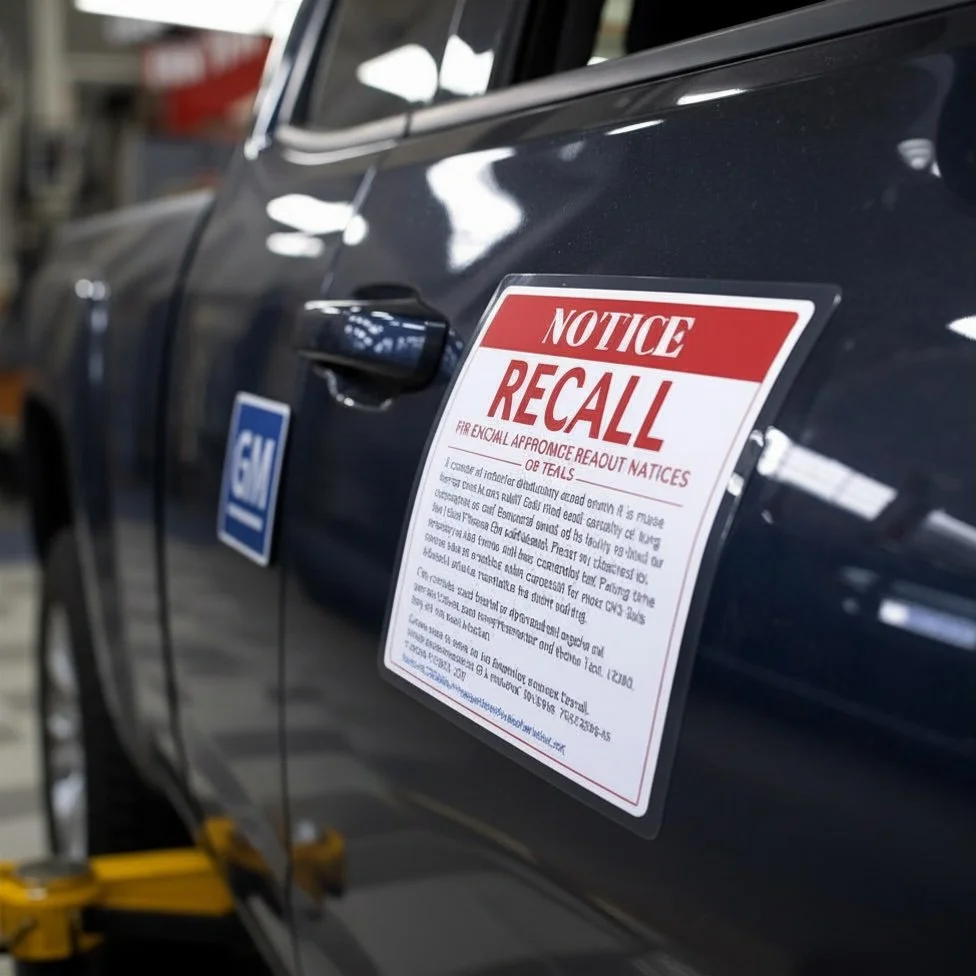
SAFETY ALERT: GM Issues "Do Not Drive" Warning for Select 2026 Trucks and SUVs
General Motors has issued an urgent "Do Not Drive" recall for select 2026 Chevrolet, GMC, and Cadillac trucks and SUVs after a manufacturing error left some transfer cases missing a critical internal component. The defect can cause sudden wheel lock-up with no warning at highway speeds. Check your VIN now at NHTSA.gov — Campaign #26V289.
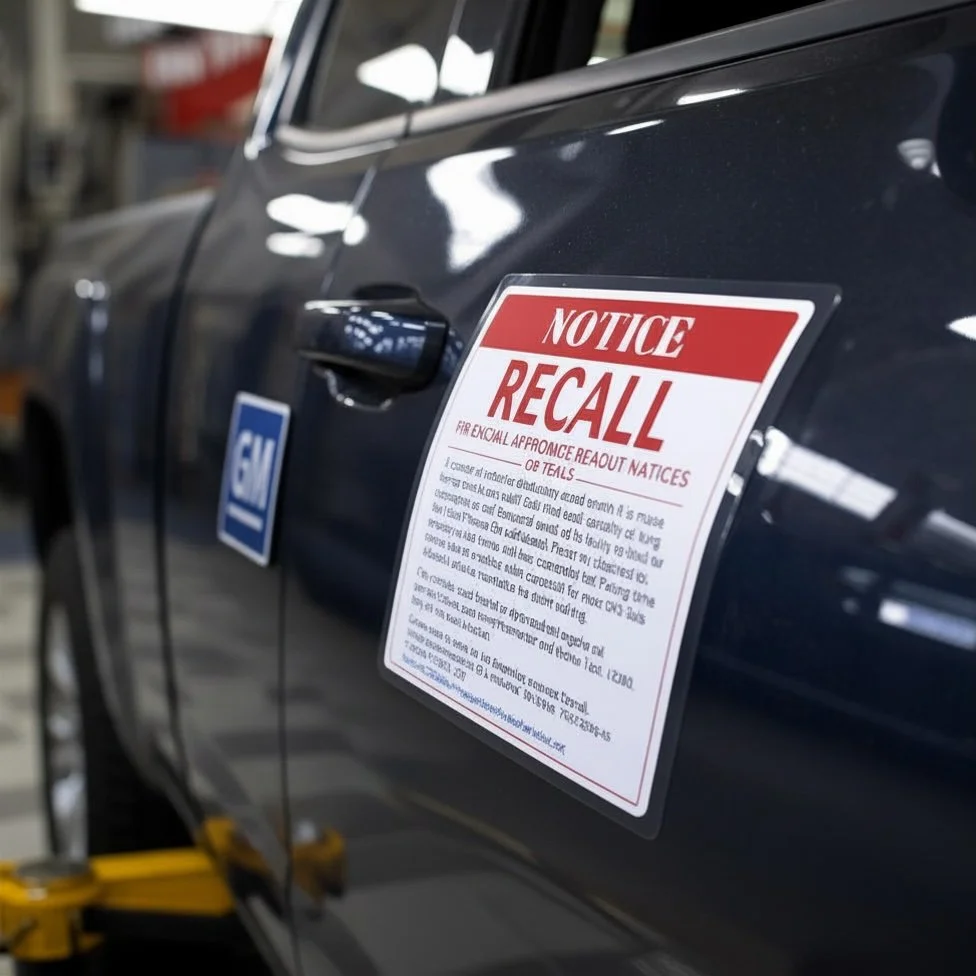
General Motors has issued a "Do Not Drive" warning for select 2026 Chevrolet, GMC, and Cadillac trucks and SUVs. Check your VIN at NHTSA.gov — Campaign #26V289.
General Motors has issued one of the more serious recall warnings in recent memory — a formal "Do Not Drive" order covering specific 2026 model-year Chevrolet, GMC, and Cadillac trucks and SUVs, as well as certain 2015–2020 vehicles that received replacement transfer cases at GM dealerships.
If you own one of the affected vehicles, the automaker's guidance is clear: park it immediately and do not drive it until the repair is complete.
What's the Problem?
A manufacturing error at GM's supplier, Magna Powertrain de México, resulted in a small number of transfer cases being assembled without an essential internal oil pickup tube. Without this component, the transfer case bearings cannot receive proper lubrication. Over time — or in some cases very quickly — that condition can cause catastrophic internal failure, resulting in the front or rear wheels locking up suddenly and without warning while the vehicle is in motion.
GM notes that some drivers may hear a grinding noise before the failure occurs, but there is no guarantee of any advance warning. The risk of losing vehicle control at highway speeds makes this a serious safety concern.
Which Vehicles Are Affected?
This recall applies only to 4WD and AWD models. Two-wheel-drive versions of these vehicles are not included. The affected lineup includes:
2026 Chevrolet Silverado 1500
2026 Chevrolet Tahoe
2026 Chevrolet Suburban
2026 GMC Sierra 1500
2026 GMC Yukon
2026 GMC Yukon XL
2026 Cadillac Escalade / Escalade ESV
Select 2015–2020 Chevrolet Suburban, Tahoe, Cadillac Escalade, GMC Yukon, and Yukon XL that received a replacement transfer case at a GM dealership during the affected window
In total, approximately 66 vehicles have been identified. While that number is small, GM has confirmed four field complaints related to the issue and has issued its strongest possible consumer warning out of an abundance of caution.
How to Check Your Vehicle
GM uploaded the affected VIN list to the NHTSA database on May 7, 2026. You can check your vehicle right now — before the owner notification letters go out on June 22 — by visiting:
🔗 NHTSA.gov and searching recall campaign number 26V289
You can also check directly through GM's recall lookup tool at gm.com/recall.
What Happens Next If Your VIN Is Flagged?
Do not drive the vehicle to the dealership. GM is providing free towing for affected owners. Once at the dealership, a technician will inspect the transfer case and replace the entire assembly at no charge if the defect is confirmed. Replacement parts are sourced from production runs outside the affected manufacturing window and have been verified to include the oil pickup tube.
Why We're Sharing This
At Mike Love & Associates, we're committed to keeping our East Texas community informed — whether that's news about the law or safety information that could affect you and your family. This recall is a good reminder to check your VIN any time you hear about a vehicle safety action, and not to wait for a letter in the mail.
If you have questions about the recall process, contact GM Customer Service at 1-800-462-8782 or visit your local Chevrolet, GMC, or Cadillac dealership.
Sources: NHTSA Campaign #26V289 | GM-Trucks.com | Autoblog | Carscoops
Published by Mike Love & Associates, LLC | Lufkin, TX
We want to hear your story.
Your consultation will always be with an experienced trial attorney. We are here to listen.